
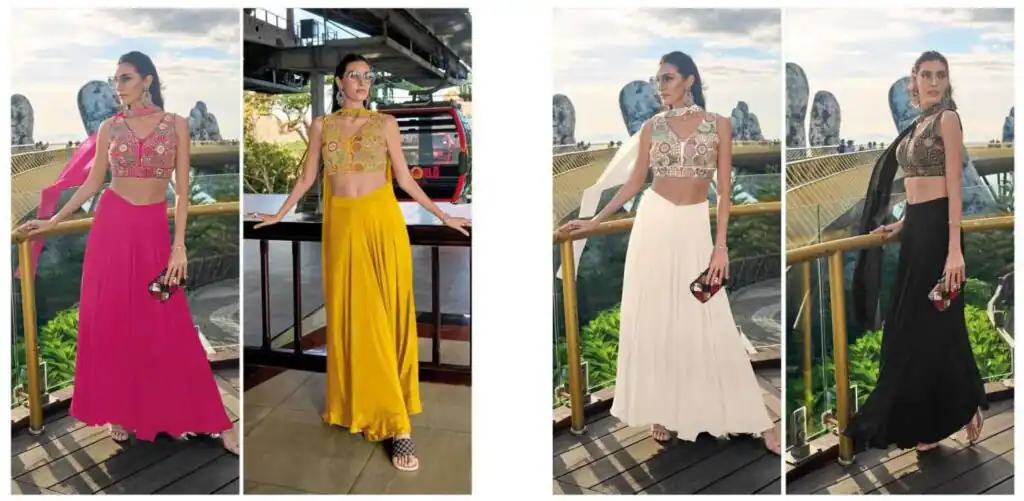
Introduction: The Beautiful Responsibility of Being a Bridesmaid
She called you first.
Before she told her colleagues. Before she posted it on social media. Before the world knew. She called you — breathless, laughing, maybe crying — and said the words that changed everything: “I am getting married. And I want you right there beside me.”
That phone call was not just an announcement. It was an invitation into one of the most intimate, chaotic, beautiful, stressful, and joyful experiences of another person’s life. And you said yes. Because that is what you do for the people you love.
Now comes the part that every bridesmaid simultaneously loves and dreads: finding the perfect lehenga.
Not just any lehenga. A lehenga that honors the bride’s vision for her wedding. A lehenga that photographs beautifully next to hers. A lehenga that makes you look stunning without crossing the invisible line between “beautiful bridesmaid” and “accidentally upstaging the bride.” A lehenga that you can actually dance in at the sangeet. A lehenga that does not require you to take out a personal loan.
It is a lot. We know.
At IndiaNari, we have dressed thousands of bridesmaids — from intimate home weddings to 500-guest destination celebrations. We understand the unique challenges of bridesmaid dressing better than almost anyone. The budget pressures. The coordination logistics. The desire to look incredible while being respectful. The need to find something that works for every event across a multi-day celebration.
This guide is everything we have learned, distilled into one comprehensive resource. It covers the trending colors for 2024-2025, the designs that are dominating wedding feeds right now, the coordination strategies that actually work, and the practical considerations that most style guides forget to mention.
By the end of this post, you will not just know what to wear. You will know exactly how to show up as the bridesmaid she deserves — beautiful, confident, and completely there for her.
Let us begin.
Table of Contents
- Understanding the Bridesmaid Role: Style Edition
- The Color Trends Breaking the Internet in 2024-2025
- The Design Trends Every Bridesmaid Needs to Know
- Coordinating with the Bride: The Art of Complementary Dressing
- Coordinating with Other Bridesmaids: The Group Aesthetic
- Event-by-Event Bridesmaid Lehenga Guide
- Body Type Guide: Flattering Lehengas for Every Bridesmaid
- Fabric Guide: Choosing the Right Material
- The Choli (Blouse) Trend File
- Dupatta Styling: The Finishing Touch
- Accessorizing Your Bridesmaid Lehenga
- Budget Strategy: Looking Expensive Without Spending Like It
- Common Bridesmaid Lehenga Mistakes
- Rewearing Your Bridesmaid Lehenga
- IndiaNari’s Bridesmaid Collection
- Final Thoughts and FAQs
1. Understanding the Bridesmaid Role: Style Edition
Before we dive into colors and designs, let us establish the style principles that every bridesmaid should understand.
The Three Rules of Bridesmaid Dressing
Rule One: The Bride Is the Star. Always.
This is non-negotiable. On this day, she is the protagonist. You are the supporting character who makes her story more beautiful. Your outfit should complement hers, not compete with it. You should look stunning — absolutely — but in a way that enhances rather than overshadows.
What this means practically:
- Your lehenga should be less heavily embellished than hers
- Your color should complement, not match, her bridal outfit
- Your jewelry should be significant but not bridal-level
- Your overall look should say “I am celebrating her” not “look at me”
Rule Two: Comfort Is Not Optional.
You will be on your feet for hours. You will be running errands. You will be helping the bride with her outfit. You will be dancing. You will be emotional. You will be managing logistics while trying to enjoy the celebration.
If your lehenga is uncomfortable — too tight, too heavy, too warm, too restrictive — you cannot do any of these things well. And if you cannot do these things well, you cannot be the bridesmaid she needs.
What this means practically:
- Choose fabrics you can move in
- Ensure your choli allows arm movement
- Test your footwear for long hours of standing
- Consider the weather and venue when choosing fabric weight
Rule Three: You Should Feel Beautiful.
This is not selfishness. This is essential. A confident, happy, beautiful bridesmaid adds joy to the wedding. She photographs well. She dances freely. She makes the bride feel surrounded by beauty and love.
Feeling beautiful is not about being the most attractive person in the room. It is about being comfortable in your own skin, in your own outfit, in your own moment of celebration.
What this means practically:
- Choose colors that flatter your skin tone
- Choose silhouettes that suit your body type
- Choose a level of embellishment that makes you feel like yourself
- Do not wear something you do not love just because someone else chose it
The Modern Indian Bridesmaid
The concept of coordinated bridesmaids is relatively new in Indian wedding culture but has exploded in popularity over the last decade. Today, Indian bridesmaids are expected to:
- Coordinate their outfits in color, style, or theme
- Look cohesive as a group in photographs
- Complement the bride’s color palette
- Attend multiple events across the wedding celebration
- Balance individual style with group coordination
This is a lot of expectation. This guide will help you meet all of it beautifully.
2. The Color Trends Breaking the Internet in 2024-2025
Color is the single most visible element of your bridesmaid lehenga. It determines how you photograph, how you complement the bride, and how the wedding aesthetic reads as a whole. Here are the colors that are trending massively right now.
Lavender and Lilac: The Undisputed Champions
If there is one color that has completely dominated the bridesmaid fashion space in 2024, it is lavender. And the trend shows absolutely no signs of slowing down.
Why lavender works for bridesmaids:
- It is universally flattering across Indian skin tones — from fair to deep
- It photographs beautifully in both natural and artificial light
- It complements virtually every bridal color — red, pink, gold, ivory, white
- It is inherently romantic without being bridal
- It creates a cohesive, visually stunning group aesthetic when multiple bridesmaids wear it
The lavender spectrum:
- Light lavender: Soft, dreamy, perfect for daytime ceremonies
- Medium lilac: Richer, more vibrant, works for evening events
- Deep purple: More dramatic, perfect for reception and cocktail functions
- Mauve: A muted, sophisticated alternative for women who prefer subtlety
Styling lavender bridesmaid lehengas:
- Pair with silver or pearl jewelry for a cool, elegant effect
- Add a contrasting dupatta in ivory or champagne for dimension
- Choose embellishment in silver or crystal rather than gold for a cohesive color story
- Wear subtle, dewy makeup with a soft pink or mauve lip
Sage Green and Mint: The Earthy Elegance
Green in its softer, muted variations — sage, mint, pistachio, and olive — has become one of the most popular bridesmaid colors. It brings an earthy, organic quality to wedding aesthetics that feels both contemporary and timeless.
Why sage green works for bridesmaids:
- It evokes nature, growth, and new beginnings — perfect wedding symbolism
- It complements traditional red and gold bridal outfits beautifully
- It photographs spectacularly in outdoor, garden, and destination wedding settings
- It flatters warm and neutral skin tones exceptionally well
- It feels fresh and modern without being trendy to the point of becoming dated
The green spectrum for bridesmaids:
- Sage green: The most popular, muted and sophisticated
- Mint green: Brighter, fresher, more youthful
- Pistachio: Warm, soft, unique
- Olive: Earthy, deep, dramatic
- Emerald: Traditional, rich, evening-appropriate
Styling green bridesmaid lehengas:
- Pair with gold jewelry for a warm, traditional look
- Add antique gold or kundan accessories for a heritage feel
- Choose floral or nature-inspired embellishment to enhance the organic quality
- Wear warm-toned makeup with a coral or peach lip
Dusty Rose and Blush: The Romantic Classic
Dusty rose — that beautiful, muted pink that is neither too bright nor too pale — remains one of the most consistently popular bridesmaid colors across cultures and wedding styles.
Why dusty rose works for bridesmaids:
- It is inherently romantic and wedding-appropriate
- It flatters virtually every skin tone in the Indian spectrum
- It complements both traditional and modern bridal outfits
- It creates a soft, cohesive group aesthetic that is always beautiful
- It photographs with warmth and glow in all lighting conditions
The pink spectrum for bridesmaids:
- Blush pink: Very soft, barely-there pink, elegant and understated
- Dusty rose: Muted, warm, the most universally flattering pink
- Mauve pink: Cooler, more sophisticated, slightly less traditional
- Rose gold: Metallic-toned pink, glamorous and evening-ready
- Hot pink/Fuchsia: Bold, vibrant, for bridesmaids who want to make a statement
Styling rose-toned bridesmaid lehengas:
- Pair with rose gold or pearl jewelry for a cohesive, romantic effect
- Choose embellishment in gold or silver depending on the shade
- Wear natural, glowing makeup with a matching lip tone
- Add a contrasting dupatta in deep wine or champagne for depth
Powder Blue and Ice Blue: The Serene Statement
Blue in its softer variations has emerged as a powerful bridesmaid color — serene, elegant, and surprisingly versatile for Indian wedding contexts.
Why powder blue works for bridesmaids:
- It creates a calm, serene counterpoint to the vibrant energy of Indian weddings
- It complements red, pink, and gold bridal outfits with beautiful contrast
- It photographs with clarity and elegance in all settings
- It flatters cool and neutral skin tones particularly well
- It feels sophisticated and slightly unexpected
The blue spectrum for bridesmaids:
- Powder blue: Soft, light, dreamy
- Ice blue: Cool, crisp, slightly more dramatic
- Sky blue: Bright, cheerful, daytime-perfect
- Teal: Deeper, more intense, evening-appropriate
- Navy: Dark, dramatic, formal
Styling blue bridesmaid lehengas:
- Pair with silver, diamond, or pearl jewelry
- Choose crystal or silver embellishment rather than gold
- Wear cool-toned makeup with a pink or berry lip
- Add a contrasting dupatta in silver, ivory, or champagne
Champagne, Gold, and Ivory: The Quiet Luxury
Neutral metallics have become a significant bridesmaid trend — particularly for modern, sophisticated wedding aesthetics where understated elegance is the priority.
Why neutrals work for bridesmaids:
- They are the epitome of quiet luxury — expensive-looking without being loud
- They complement absolutely every bridal color
- They create a timeless aesthetic that never looks dated in photographs
- They allow individual bridesmaids to express personal style through accessories and jewelry
Important consideration: Ivory and white-adjacent neutrals can sometimes read as bridal. Check with the bride before choosing these shades. If the bride is wearing white, ivory, or champagne, these colors should be avoided by bridesmaids.
Styling neutral bridesmaid lehengas:
- Gold lehengas pair with kundan or polki jewelry
- Champagne lehengas pair with pearl or diamond jewelry
- Add bold lips or dramatic eye makeup for contrast
- Choose embellishment in tonal gold or silver for a cohesive, elegant effect
Coral and Peach: The Warm Celebration
Coral and peach tones bring warmth, energy, and joy to bridesmaid dressing — perfect for daytime ceremonies, outdoor weddings, and celebrations with a vibrant, festive energy.
Why warm tones work for bridesmaids:
- They bring natural warmth and glow to photographs
- They complement warm-toned skin beautifully
- They create a joyful, celebratory group aesthetic
- They work exceptionally well for summer and outdoor weddings
The warm-tone spectrum:
- Peach: Soft, warm, romantic
- Coral: Brighter, more energetic, vibrant
- Terracotta: Earthy, warm, contemporary
- Rust: Deep, rich, autumn-perfect
- Burnt orange: Bold, dramatic, unconventional
Trending Color Combinations for Bridesmaid Groups
Beyond single colors, coordinated color combinations are a major trend:
| Color Combination | Aesthetic | Best For |
|---|---|---|
| Shades of one color (ombre group) | Each bridesmaid wears a different shade of the same color | Large bridesmaid groups, cohesive but individual look |
| Complementary pair (blush and sage) | Two colors that complement each other | Two-person bridesmaid teams, balanced aesthetic |
| Jewel tone mix | Each bridesmaid wears a different jewel tone | Bold, dramatic, eclectic wedding aesthetic |
| Pastel spectrum | Each bridesmaid wears a different pastel | Romantic, garden-style, destination weddings |
| Monochrome group with contrast bride | All bridesmaids in one color, bride in a contrasting shade | Maximum visual impact in group photographs |
3. The Design Trends Every Bridesmaid Needs to Know
Beyond color, the design and silhouette of your bridesmaid lehenga matter enormously. Here are the designs that are trending in 2024-2025.
The Pre-Draped Lehenga: Convenience Meets Elegance
The pre-draped lehenga — where the dupatta is attached and the pleats are pre-set — has become a massive bridesmaid trend, and for very good reason.
Why bridesmaids love it:
- No need to worry about dupatta management throughout the event
- Pleats stay perfect for hours
- Looks polished in every photograph without adjustment
- Allows free movement for dancing, hugging, and helping the bride
- Eliminates the “is my dupatta falling?” anxiety completely
Best for: Sangeet, cocktail, reception, and any event where you will be active
The Ruffle Lehenga: Playful Glamour
Ruffled hems, ruffled dupattas, and ruffled tiers on lehenga skirts are one of the most photogenic bridesmaid trends right now. The movement and texture that ruffles create are genuinely stunning in photographs and on video.
Why it works for bridesmaids:
- Creates beautiful movement in photographs and video
- Adds visual interest without heavy embellishment
- Feels young, fun, and celebratory
- Works in both heavy and lightweight fabrics
Best fabrics for ruffles: Organza, georgette, net, tulle
The Sequin Lehenga: Dance Floor Ready
All-over sequin lehengas — in muted tones like champagne, rose gold, silver, and soft pastels — have become a bridesmaid staple for sangeet and cocktail events.
Why it works for bridesmaids:
- Catches light beautifully in evening and indoor lighting
- Creates a glamorous, festive look without heavy traditional embellishment
- Relatively lightweight compared to zardosi or stone work
- Easy to rewear for future occasions
Best for: Sangeet, cocktail, reception, evening events
The Printed Lehenga: Modern Heritage
Printed lehengas — featuring digital florals, Mughal motifs, botanical prints, and abstract art — have become a significant trend for bridesmaids who want to look ethnic without heavy embellishment.
Why it works for bridesmaids:
- Creates visual interest without the weight and cost of heavy embroidery
- Feels modern and contemporary while remaining culturally appropriate
- Easier to maintain and rewear than embellished lehengas
- Available at more accessible price points
Best print styles for bridesmaids:
| Print Style | Vibe | Best For |
|---|---|---|
| Digital florals | Romantic, modern | Garden and outdoor weddings |
| Mughal motifs | Heritage, sophisticated | Traditional ceremonies |
| Botanical prints | Fresh, contemporary | Destination and daytime weddings |
| Abstract art prints | Fashion-forward, unique | Modern and unconventional weddings |
| Geometric prints | Clean, structured | Minimalist wedding aesthetics |
The Mirror Work Lehenga: Traditional Sparkle
Mirror work lehengas continue to trend strongly for bridesmaids, particularly for mehendi and daytime functions where their light-catching quality shines most beautifully.
Why it works for bridesmaids:
- Creates natural sparkle without heavy embellishment
- Feels authentic and artisanal
- Photographs beautifully in natural light
- Supports traditional Indian craft
Best for: Mehendi, haldi, daytime ceremonies, outdoor functions
The Cape and Jacket Lehenga: The Fashion Statement
Cape lehengas and jacket-style lehengas allow bridesmaids to make a fashion statement while maintaining modesty and elegance.
Why it works for bridesmaids:
- Creates a dramatic silhouette that photographs beautifully
- The cape or jacket adds an extra layer that can be removed for dancing
- Allows different body types to find flattering options
- Feels modern and fashion-forward
Cape variations for bridesmaids:
- Attached cape: Flows from the shoulders, creating a dramatic back view
- Detachable cape: Can be removed to reveal a different choli underneath
- Jacket style: Structured, like a short or long jacket over the choli
- Sheer cape: Organza or net cape that adds drama without weight
The Tiered and Layered Lehenga: Bohemian Elegance
Tiered lehengas with multiple layers of fabric create a bohemian, romantic aesthetic that is particularly beautiful for outdoor and destination weddings.
Why it works for bridesmaids:
- Creates beautiful movement and flow
- Adds volume without heaviness
- Feels relaxed and romantic
- Works beautifully in lighter fabrics for warm-weather weddings
4. Coordinating with the Bride: The Art of Complementary Dressing
One of the most important — and most delicate — aspects of bridesmaid dressing is coordinating with the bride’s outfit.
Understanding the Bride’s Color Story
Before choosing your lehenga, you need to know:
- What color is the bride wearing for each event?
- Does she have a specific color palette for the wedding?
- Are there colors she specifically wants or does not want bridesmaids to wear?
- Is she wearing different colors for different events?
Ask directly. Most brides have strong opinions about their wedding color palette. Respecting those opinions is part of being a good bridesmaid.
The Complementary Color Strategy
The most effective approach is choosing colors that complement the bride’s outfit rather than matching it.
| Bride’s Color | Best Bridesmaid Colors | Colors to Avoid |
|---|---|---|
| Red | Sage green, gold, lavender, blush pink | Red, orange (too close), white |
| Pink/Blush | Sage green, powder blue, champagne | Same shade of pink, red |
| Ivory/White | Pastels, soft metallics, dusty rose | White, ivory, champagne |
| Gold | Dusty rose, sage, lavender, powder blue | Gold, bright yellow |
| Maroon/Burgundy | Peach, champagne, sage, lilac | Maroon, deep red |
| Pastel (any) | Complementary pastel or soft jewel tone | Same shade, much darker |
The Embellishment Hierarchy
This is crucial: your embellishment should be beautiful but less elaborate than the bride’s.
If the bride is wearing heavy zardosi with stone work, you can wear moderate sequin or resham work. If the bride is wearing moderate embellishment, you should keep yours lighter still.
The visual hierarchy should always read: Bride (most elaborate) then Bridesmaids (beautiful but less elaborate) then General Guests (festive but simpler).
5. Coordinating with Other Bridesmaids: The Group Aesthetic
When multiple bridesmaids are involved, coordination becomes both more complex and more rewarding.
Coordination Strategies That Work
Option 1: Identical Outfits
All bridesmaids wear the same lehenga in the same color and design.
Advantage: Maximum visual impact in group photographs. Clean, cohesive look.
Disadvantage: One size and style rarely flatters every body type equally. Can feel restrictive.
Best for: Bridesmaids with similar body types. Smaller groups. Brides who want a very specific visual.
Option 2: Same Color, Different Styles
All bridesmaids wear the same color but choose different lehenga silhouettes, choli designs, or embellishment levels.
Advantage: Cohesive color story while allowing each bridesmaid to choose what flatters her body. Individual expression within a framework.
Disadvantage: Requires more coordination to ensure the different styles still read as a group.
Best for: Groups with different body types. Bridesmaids who value individual expression. Larger groups.
Option 3: Same Color Family, Different Shades
Each bridesmaid wears a different shade of the same color — for example, one in blush, one in dusty rose, one in mauve, one in deep pink.
Advantage: Creates a beautiful gradient effect in group photographs. Each bridesmaid gets her most flattering shade. Visually stunning and photogenic.
Disadvantage: Requires careful shade selection to ensure the gradient reads clearly. Can be challenging to coordinate online.
Best for: Larger groups. Photograph-conscious brides. Groups where different shades suit different skin tones.
Option 4: Curated Color Palette
Each bridesmaid wears a different color, but all colors are from a curated palette that works together.
Advantage: Maximum individual expression. Each bridesmaid gets her best color. Creates a vibrant, joyful group aesthetic.
Disadvantage: Requires strong aesthetic curation to ensure the colors work together. Can look random if not carefully coordinated.
Best for: Creative brides. Small groups. Fashion-forward wedding aesthetics.
Making Group Coordination Work
Start early. Coordination takes time. Begin discussing bridesmaid outfits at least 3-4 months before the wedding.
Share swatches or photos. In the age of online shopping, sharing product links or color swatches via group chat is essential for ensuring everyone is on the same page.
Designate one coordinator. One bridesmaid should manage the coordination logistics — collecting measurements, comparing options, ensuring consistency.
Budget honestly. Different bridesmaids have different budgets. Acknowledge this openly and find options that work for everyone.
Prioritize photographs. Ultimately, coordinated bridesmaids are about group photographs. Think about how the group will look together in pictures, not just how each individual looks alone.
6. Event-by-Event Bridesmaid Lehenga Guide
Indian weddings are multi-day celebrations. Here is how to dress for each event.
Mehendi
Your role: Keep the bride company, manage logistics, participate in the henna ceremony.
Best lehenga style: Comfortable, colorful, easy to move in.
Color recommendations: Yellow, green, coral, orange — bright, happy colors
Fabric: Cotton, light georgette, linen
Embellishment: Minimal to moderate — mirror work, light embroidery, prints
Footwear: Comfortable flats or low juttis
Practical note: You will be sitting on the floor, moving around constantly, and possibly getting henna on your clothes. Do not wear anything you cannot afford to stain.
Haldi
Your role: Participate in the turmeric ceremony, which involves applying haldi paste.
Best lehenga style: Something you genuinely do not mind getting permanently stained yellow.
Color: Yellow or a color that will not show turmeric stains dramatically.
Fabric: Washable cotton
Embellishment: None that you value
Practical note: This is not the event for your expensive lehenga. Wear something cheerful and disposable. Some bridesmaids opt for matching yellow outfits as a group — a beautiful photo opportunity.
Sangeet
Your role: Dance, perform, celebrate, ensure the entertainment runs smoothly.
Best lehenga style: Dance-ready, glamorous, show-stopping.
Color: Bold, festive — sequins, metallics, jewel tones
Fabric: Georgette, net, sequin fabric — anything that moves and sparkles
Embellishment: Sequins, shimmer, mirror work — anything that catches stage lighting
Footwear: Comfortable heels or embellished flats you can dance in
Practical note: You will likely be performing a choreographed dance. Test your lehenga for range of motion. Ensure your dupatta is secured or pre-draped so it does not come undone mid-performance.
The Wedding Ceremony
Your role: Support the bride emotionally, manage her lehenga and dupatta, be present for rituals.
Best lehenga style: Elegant, traditional, respectful of the ceremony.
Color: Complementary to the bride, appropriate for the ceremony context
Fabric: Silk, heavy georgette, chanderi — something with gravitas
Embellishment: Moderate — beautiful but not competing with the bride
Footwear: Comfortable, elegant — you will be standing for long periods
Practical note: You may need to help the bride adjust her outfit, bring her water, hand her tissues. Your own outfit needs to allow you to move freely while looking polished.
Reception
Your role: Celebrate, dance, ensure the bride is comfortable, welcome guests.
Best lehenga style: Glamorous, evening-ready, your most stunning look.
Color: Deep jewel tones, metallics, dramatic pastels
Fabric: Velvet, heavy georgette, organza, net
Embellishment: This is the event for your heaviest embellishment (while still respecting the embellishment hierarchy with the bride)
Footwear: Your best heels
Practical note: The reception is typically the most photographed event. This is where your lehenga investment pays off the most.
7. Body Type Guide: Flattering Lehengas for Every Bridesmaid
Every bridesmaid group includes women with different body types. Here is how each body type can find her most flattering lehenga within the group coordination framework.
Quick Reference for Bridesmaid Body Types
| Body Type | Best Lehenga Silhouette | Best Choli Style | Coordination Tip |
|---|---|---|---|
| Hourglass | A-line, fitted waist | Fitted, sweetheart neck | Can wear most styles within the group coordination |
| Pear | A-line, panelled | Embellished neckline, wider neck | Choose the choli style that balances her proportions |
| Apple | High-waist, empire line | Deep V-neck, longer length | May need a different choli cut than others for comfort |
| Rectangle | Full flare, layered | Peplum, ruffled | Benefits from the most volume-adding silhouette |
| Inverted Triangle | Full skirt, tiered | Halter, narrow V-neck | Heavier embellishment on the lehenga, lighter on choli |
| Petite | Moderate A-line, not too heavy | Well-fitted, proportionate | May need shorter length than others in the group |
| Tall | Full flare, dramatic | Any style works | Can carry the most volume and embellishment |
| Plus-Size | A-line, well-fitted | Supportive, well-constructed | Prioritize fit above all else |
The Group Coordination Body Type Solution
When coordinating a group with different body types, the most effective approach is same color, different choli styles. This allows each bridesmaid to choose the choli neckline, sleeve length, and cut that flatters her body while maintaining the coordinated color story.
8. Fabric Guide: Choosing the Right Material
Your fabric choice as a bridesmaid needs to balance beauty with practicality. Here is the breakdown.
Best Fabrics for Bridesmaid Lehengas
| Fabric | Comfort Level | Glamour Level | Maintenance | Best For |
|---|---|---|---|---|
| Georgette | High | High | Medium | All events, all seasons |
| Crepe | High | Medium-High | Low | All events, travel-friendly |
| Net/Tulle | Medium | Very High | High | Evening events, sangeet |
| Silk | Medium | Very High | High | Ceremony, reception |
| Organza | Medium | High | Medium | Ceremony, cocktail |
| Cotton Silk | Very High | Medium | Low | Daytime, summer events |
| Velvet | Low-Medium | Very High | High | Winter events, reception |
The Comfort Factor
As a bridesmaid, you are working harder than any other guest at the wedding. You are managing logistics, supporting the bride, standing for hours, and dancing. Comfort is not a luxury — it is a necessity.
Choose fabrics that:
- Allow movement and breathability
- Do not wrinkle excessively when you sit
- Hold their shape throughout a long event
- Feel good against your skin for extended wear
9. The Choli (Blouse) Trend File
The choli is where modern bridesmaids are making their biggest style statements. Here are the trending choli designs.
Trending Choli Designs for Bridesmaids
The Corset Choli: Structured, boned, and fitted like a Western corset. Creates a beautiful hourglass silhouette and looks stunning with high-waisted lehenga skirts.
The Off-Shoulder Choli: Modern, slightly dramatic, and perfect for evening events. Creates a beautiful shoulder line in photographs.
The Full-Sleeve Choli: Making a massive comeback. Full sleeves in sheer fabric (net, organza) with embellishment create a modest yet glamorous effect.
The Halter Neck Choli: Clean, contemporary, and perfect for bridesmaids who want a minimal, modern look.
The Backless Choli: A dramatic back design with a modest front creates a beautiful surprise element, especially effective in photographs taken from behind.
The Peplum Choli: A choli with a flared peplum at the waist adds femininity and works beautifully for rectangle body types.
The Crop Top Choli: A shorter, crop-top style choli that shows a sliver of midriff. Modern, youthful, and perfect for sangeet and cocktail events.
Choli Necklines That Photograph Well
| Neckline | Best For | Photograph Effect |
|---|---|---|
| Sweetheart | Hourglass, rectangle | Romantic, feminine, classic |
| Deep V | Apple, plus-size | Elongating, slimming |
| Round | All body types | Universal, versatile |
| Off-shoulder | Pear, rectangle | Broadens shoulders, dramatic |
| Boat neck | Pear, inverted triangle | Elegant, sophisticated |
| High neck | Tall, athletic | Regal, formal, fashion-forward |
| Halter | Inverted triangle, tall | Modern, clean lines |
10. Dupatta Styling: The Finishing Touch
How you drape your dupatta can completely transform your bridesmaid lehenga. Here are the trending draping styles.
Draping Styles for Bridesmaids
The Single Shoulder Cascade: Draped over one shoulder, flowing down the front and back. Classic, elegant, universally flattering. The most common and most reliable bridesmaid drape.
The Front Pin: Pinned at the chest, flowing over both shoulders and behind. Clean, formal, great for ceremonies. Keeps the dupatta secure without constant adjustment.
The Arm Drape: Looped through both arms, hanging behind the back. Casual, contemporary, perfect for sangeet and cocktail events. Shows off the choli completely.
The Cape Drape: Pinned at both shoulders, flowing behind like a cape. Dramatic, photo-worthy, perfect for entrance moments and posed photographs.
The Belt Drape: Draped across the body and secured with a statement belt at the waist. Modern, fashion-forward, keeps the dupatta completely secure for dancing.
No Dupatta: Increasingly popular for cocktail, sangeet, and reception events. Lets the choli and lehenga speak for themselves.
Dupatta Coordination Tips
When coordinating a bridesmaid group, consider:
- All bridesmaids using the same draping style for photographs creates a clean, cohesive visual
- If bridesmaids have different body types, different draping styles may be more flattering
- Practice the draping style before the event — dupatta management is a skill
11. Accessorizing Your Bridesmaid Lehenga
The Bridesmaid Jewelry Formula
The golden rule: Your jewelry should be significant enough to look festive and wedding-appropriate, but not so elaborate that it reads as bridal.
For traditional ceremonies:
- A medium-weight necklace set with matching earrings
- A maang tikka if appropriate
- Bangles or a statement bracelet
For sangeet and cocktail:
- Statement earrings with minimal necklace
- A cocktail ring
- A fashion bracelet or cuff
For reception:
- Your most significant jewelry — chandelier earrings or a statement necklace
- Coordinated bangles
- Optional: A matha patti or maang tikka for traditional styling
Metal Matching Guide
| Lehenga Color | Best Metal | Why |
|---|---|---|
| Lavender/Lilac | Silver, white gold | Cool tones complement cool colors |
| Sage/Mint Green | Gold, antique gold | Warm metal adds depth to earthy tones |
| Dusty Rose/Blush | Rose gold, gold | Warm metals enhance warm colors |
| Powder Blue | Silver, platinum | Cool tones maintain color harmony |
| Champagne/Gold | Gold, kundan | Matching metals create cohesion |
| Coral/Peach | Gold, rose gold | Warm metals complement warm shades |
Footwear for Bridesmaids
The practical truth: You will be on your feet for hours. Choose wisely.
Best options:
- Block heels: The most practical heel option — stability with height
- Embellished juttis: Traditional, beautiful, comfortable for long events
- Wedge heels: Stability and height, particularly useful on grass or uneven outdoor surfaces
- Kitten heels: Low height, manageable for long events
- Embellished flats: For events where comfort is absolute priority
Avoid: Very high stilettos for outdoor events or events involving significant standing and dancing
12. Budget Strategy: Looking Expensive Without Spending Like It
Let us talk about the elephant in the room: bridesmaid outfits can be expensive, especially when you need multiple looks across a multi-day wedding.
Budget-Smart Strategies
Strategy 1: Invest in one hero lehenga
Choose one beautiful lehenga for the main event (wedding ceremony or reception) and restyle it for other events with different dupattas, jewelry, and accessories.
Strategy 2: Mix investment and affordable pieces
Wear a beautiful lehenga for the ceremony and more affordable options for mehendi and haldi events.
Strategy 3: Coordinate with other bridesmaids on bulk purchases
Buying the same lehenga in multiple sizes from one shop often allows for group discounts.
Strategy 4: Choose designs that can be reworn
A sequin lehenga or a printed lehenga can be worn to future events. Heavy, bridal-adjacent embellishment is harder to rewear.
Strategy 5: Separate choli and lehenga
A versatile lehenga skirt with multiple cholis gives you different looks at a fraction of the cost of multiple lehengas.
Price Point Reality
| Budget Range | What You Can Expect |
|---|---|
| Under Rs. 5,000 | Simple lehengas, printed fabrics, minimal embellishment |
| Rs. 5,000 – Rs. 15,000 | Good quality lehengas with moderate embellishment |
| Rs. 15,000 – Rs. 30,000 | Higher quality fabrics with detailed embellishment |
| Rs. 30,000 – Rs. 50,000 | Premium fabrics with significant embellishment |
| Above Rs. 50,000 | Designer or heavily embellished statement pieces |
The IndiaNari advantage: We offer bridesmaid lehengas across every price point, ensuring that budget does not compromise beauty or quality.
13. Common Bridesmaid Lehenga Mistakes
Mistake 1: Choosing Style Over Comfort
The mistake: Wearing a restrictive, uncomfortable lehenga because it looks beautiful.
The consequence: Spending the entire wedding adjusting, fidgeting, and being unable to fulfill your bridesmaid duties.
The fix: Test every lehenga for comfort. Sit, stand, raise your arms, bend, and dance in it before committing.
Mistake 2: Ignoring the Bride’s Vision
The mistake: Choosing a lehenga based entirely on personal preference without consulting the bride.
The consequence: Clashing with the wedding aesthetic or inadvertently competing with the bride.
The fix: Always check with the bride before finalizing your outfit. Share photographs for approval.
Mistake 3: Leaving It Too Late
The mistake: Shopping for your bridesmaid lehenga a week before the wedding.
The consequence: Limited options, no time for alterations, stress during an already stressful period.
The fix: Begin shopping at least 6-8 weeks before the wedding. Allow 2-3 weeks for alterations.
Mistake 4: Forgetting About Alterations
The mistake: Assuming the lehenga will fit perfectly off the rack.
The consequence: An ill-fitting lehenga that undermines an otherwise beautiful look.
The fix: Budget both time and money for professional alterations. Perfect fit transforms everything.
Mistake 5: Over-Accessorizing
The mistake: Wearing heavy bridal-level jewelry with an already embellished lehenga.
The consequence: Looking overdone and potentially competing with the bride.
The fix: Choose accessories that complement, not compete. When in doubt, less is more.
14. Rewearing Your Bridesmaid Lehenga
A bridesmaid lehenga is an investment. Here is how to get more value from it.
How to Rewear a Bridesmaid Lehenga
As a wedding guest: Wear the same lehenga to future weddings with completely different styling — different jewelry, different dupatta draping, different hair and makeup.
The lehenga skirt with a different top: Pair your lehenga skirt with a contrasting crop top, a casual kurta, or even a fitted t-shirt for a fusion look.
The choli with other outfits: A beautiful embellished choli can be worn with a saree, with a simple skirt, or even with high-waisted pants for a contemporary look.
Festival wear: Your bridesmaid lehenga is perfect for Diwali, Eid, Navratri, and other festive occasions.
Photography: Styled photoshoots, pre-wedding shoots for friends, or even professional headshots in Indian ethnic wear.
15. IndiaNari’s Bridesmaid Collection
At IndiaNari, we have curated a dedicated bridesmaid collection based on everything we know about what bridesmaids need.
What Makes Our Bridesmaid Collection Special
Color Coordination: Our collection is organized by color family, making it easy to find matching or coordinating options for entire bridesmaid groups.
Size Inclusivity: We offer comprehensive sizing to ensure every bridesmaid in the group finds her perfect fit.
Style Range: From traditional to contemporary, from heavily embellished to minimal, we offer options for every wedding aesthetic.
Multiple Price Points: Beautiful bridesmaid lehengas across every budget range, because looking stunning should not require financial stress.
Group Ordering Support: Our team can help coordinate orders for bridesmaid groups, ensuring consistency in color and timely delivery.
Styling Guidance: Not sure what works? Our styling team provides personalized advice for individual bridesmaids and coordinated groups.
Current Bridesmaid Bestsellers
The Lavender Dream Collection: Our most popular bridesmaid range — lavender and lilac lehengas in georgette, organza, and net with varying embellishment levels.
The Sage and Mint Edit: Earthy green lehengas perfect for outdoor and garden wedding aesthetics.
The Rose Gold Glamour Range: Sequin and shimmer lehengas in rose gold and champagne tones for evening events.
The Pastel Palette: Coordinated pastel options in blush, powder blue, mint, lavender, and peach for groups that want a multi-pastel aesthetic.
The Contemporary Bridesmaid: Cape lehengas, pre-draped sets, and modern silhouettes for fashion-forward wedding parties.
Explore IndiaNari’s Complete Bridesmaid Collection — Organized by color, style, and budget. Group ordering support available. Free shipping on orders above Rs. 999. Expert styling guidance for every purchase.
16. Final Thoughts: More Than Just an Outfit
Here is what we want every bridesmaid to remember:
The lehenga matters. The color matters. The design matters. The coordination matters.
But what matters most is why you are there.
You are there because someone you love is beginning a new chapter. You are there because she trusts you to stand beside her during one of the most vulnerable, joyful, terrifying, and beautiful moments of her life. You are there because your presence — your laughter, your tears, your help, your love — makes her day better.
The lehenga is not the point. You are the point.
The right lehenga simply helps you be there fully — comfortable enough to help, beautiful enough to celebrate, confident enough to dance, and present enough to hold her hand when she needs it.
That is what a bridesmaid lehenga should do. Not make you a fashion plate. Not make you Instagram-famous. Not make you the center of attention.
It should help you be the friend she called first. The one who said yes without hesitation. The one who will stand beside her and mean it.
And at IndiaNari, helping you find that lehenga — the one that lets you be fully, beautifully, completely there — is everything we do.
She chose you. Now choose the lehenga that lets you show up for her the way she deserves.
Frequently Asked Questions
Q1: Should bridesmaids all wear the same lehenga?
A: Not necessarily. The most inclusive and flattering approach is often “same color, different styles” — allowing each bridesmaid to choose the silhouette and choli design that flatters her body type while maintaining the coordinated color story.
Q2: How far in advance should bridesmaids order their lehengas?
A: At least 6-8 weeks before the wedding. This allows time for delivery, trying on, alterations, and any exchanges if needed. For custom or semi-custom orders, allow 3-4 months.
Q3: What colors should bridesmaids avoid?
A: Generally avoid red (traditionally bridal), white or very pale ivory (can read as bridal in some traditions), and whatever specific color the bride is wearing. Always check with the bride before finalizing your color choice.
Q4: How much should a bridesmaid spend on a lehenga?
A: This varies enormously based on personal budget, the number of events, and the wedding’s formality level. A beautiful bridesmaid lehenga can be found at every price point from Rs. 3,000 to Rs. 50,000 and above. Prioritize fit and fabric quality over embellishment quantity.
Q5: Can bridesmaids wear a lehenga to every wedding event?
A: Different events call for different outfits. A lehenga is appropriate for the main ceremony, sangeet, cocktail, and reception. For mehendi and haldi, a simpler outfit — a suit, a casual lehenga, or a saree — may be more practical and appropriate.
Q6: What if the bridesmaids have very different body types?
A: This is common and completely manageable. Choose the same color and let each bridesmaid select the lehenga silhouette, choli design, and length that flatters her body. The color coordination will create group cohesion while the different styles ensure everyone looks her best.
Q7: How do I coordinate with bridesmaids who live in different cities?
A: Create a group chat dedicated to outfit coordination. Share product links, screenshots, and color swatches. If possible, order from the same brand to ensure color consistency. IndiaNari offers group ordering support to help with exactly this challenge.
Q8: Can I rewear my bridesmaid lehenga?
A: Absolutely. A bridesmaid lehenga can be reworn to future weddings, festive celebrations, and cultural events. Choose designs that are not too event-specific — sequin lehengas, printed lehengas, and solid-colored lehengas have the most rewearability.
Q9: What jewelry is appropriate for a bridesmaid?
A: Significant but not bridal-level. A matching necklace and earring set for traditional events, statement earrings for modern events, and coordinated bangles are all appropriate. Avoid very heavy bridal sets that compete with the bride.
Q10: Does IndiaNari offer group discounts for bridesmaid orders?
A: Please contact our customer support team for information about group ordering, bulk pricing, and bridesmaid coordination services. We are committed to making the bridesmaid shopping experience as smooth as possible for every wedding party.
Connect with IndiaNari
Website: www.indianari.com
Instagram: @IndiaNari
Facebook: IndiaNari
Pinterest: IndiaNari Style
Subscribe to our newsletter for weekly new arrivals, bridesmaid styling guides, wedding season specials, and exclusive member-only offers.
Are you a bridesmaid preparing for someone’s big day? Share this guide with your fellow bridesmaids and start coordinating today. And tell us in the comments — what color are you considering for your bridesmaid lehenga? We love hearing from our IndiaNari community and are always here to help.
Tags: #BridesmaidLehenga #BridesmaidStyle #WeddingSeason #IndianWedding #IndiaNari #BridesmaidOutfit #LehengaColors #WeddingTrends #BridesmaidFashion #EthnicWear #IndianEthnicWear #WeddingGuest #BridesmaidGoals #LehengaDesigns #WeddingInspiration #IndianFashion #BridesmaidDress #FestiveWear #WeddingParty #BridesmaidTrends